%20(1)_.png)
How to Plan Your Week in 10 Minutes

Feeling overwhelmed by your to-do list every Monday morning? You are not alone. Many people struggle with managing their time effectively, especially when juggling work, family, and personal goals. The good news is that how to plan your week does not have to be complicated or time-consuming. A quick, focused weekly reset can reduce stress and keep you on track without adding more pressure.
This article will guide you through a simple ten-minute weekly planning process organized into five clear steps. You will learn how to build a practical weekly planning routine that fits your busy life and helps you stay focused on what matters most.

How to Plan Your Week in Five Simple Steps
Step 1. Add Fixed Appointments
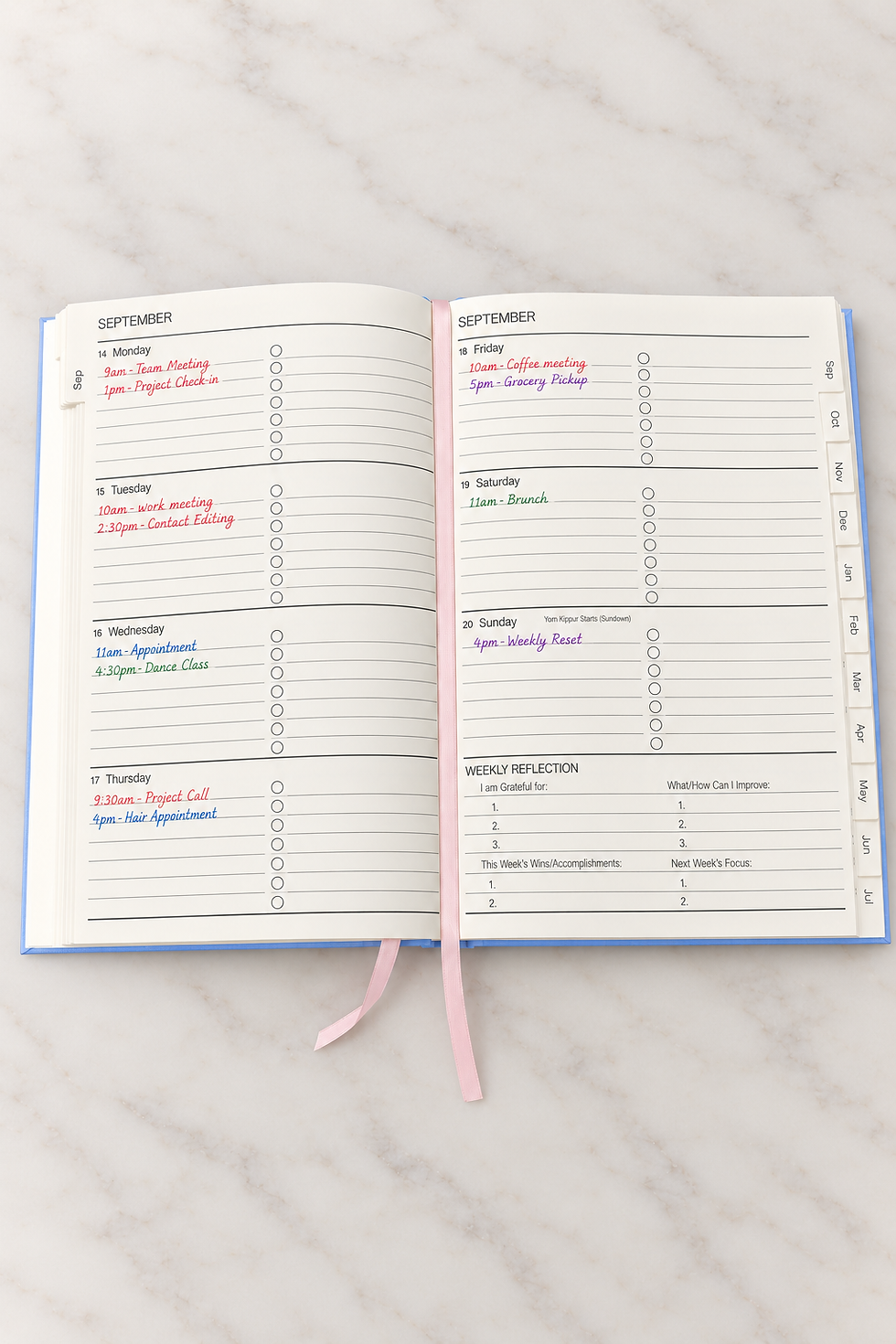
Start by writing down all your fixed appointments and commitments for the week. These are the non-negotiable events that have set times, such as:
Work meetings or classes
Doctor or dentist appointments
Kids’ school events or activities
Social gatherings you have already committed to
For example, if you have a dentist appointment on Tuesday at 3 PM and a team meeting on Thursday at 10 AM, block those times first. This creates a clear framework for your week and prevents double-booking.
By capturing these fixed points first, you build a realistic picture of your available time. This step usually takes about two minutes.
Step 2. Add Deadlines
Next, list any deadlines or due dates you need to meet during the week. These could be:
Work projects or reports
School assignments or study sessions
Bills or payments due
Personal goals like submitting an application or booking travel
For example, if a work report is due Friday afternoon and your rent payment is due Wednesday, mark those clearly in your planner. You can also add reminders a day or two before to give yourself buffer time.
Including deadlines early helps you prioritize tasks and avoid last-minute stress. This step should take about two minutes.
Step 3. Add Meals and Routines
Now, add your regular daily routines and meal times. These are the habits that keep your day grounded and balanced, such as:
Breakfast, lunch, and dinner times
Exercise sessions or walks
Morning or evening self-care routines
Time for reading or relaxation
For example, you might schedule a 30-minute walk every morning at 7 AM or set aside 20 minutes for reading before bed. Including these routines helps you maintain consistency and supports your well-being.
This step takes about two minutes and makes your plan feel more complete and manageable.
Step 4. Choose Your Top Three Priorities
With your fixed appointments, deadlines, and routines in place, identify the top three priorities for the week. These are the most important tasks or goals you want to focus on. Limiting yourself to three keeps your plan simple and achievable.
For example, your top three might be:
Finish the work report due Friday
Prepare for a presentation on Wednesday
Organize the kids’ school supplies for the week
Write these priorities clearly in your planner. They will guide your daily to-do lists and help you say no to less important distractions.
This step takes about one minute and is key to a focused weekly reset.
Step 5. Leave Room for Real Life
Finally, leave some open space in your planner for unexpected events or downtime. Life happens, and your plan should be flexible enough to handle surprises without stress.
For example, block out 30 minutes each day for breaks or buffer time. Avoid filling every hour with tasks. This way, if a meeting runs late or a family need arises, you have room to adjust.
This step takes about one minute and keeps your weekly planning routine realistic and sustainable.
Keep It Simple and Repeat Every Week
The beauty of this ten-minute weekly planning process is its simplicity. You do not need complicated systems or hours of planning. Just five focused steps that fit into your Sunday planning or any quiet moment before the week begins.
By making this a habit, you create a weekly reset that reduces stress and increases your control over your time. You will find it easier to stay on track, meet deadlines, and enjoy your routines without feeling overwhelmed.
Planning your week does not have to be a chore. With these planner tips, you can build a clear, manageable routine that fits your busy life. If you want to make your weekly reset even easier, visit the Campbell Creations Company store. Explore planners designed to help you plan your week clearly and confidently, so you can spend less time organizing and more time living.
Start your next week with a simple plan and see how much smoother your days can flow.


Comments